3 lessons learned from battle-tested microgrid experts
Source: Jana Gerber| · SCHNEIDER ELECTRIC · | January 10, 2023
Right now, the world is facing an urgent sustainability dilemma: On one hand, we’re seeing rapid transformations in technology across all sectors, thanks to digital intelligence.
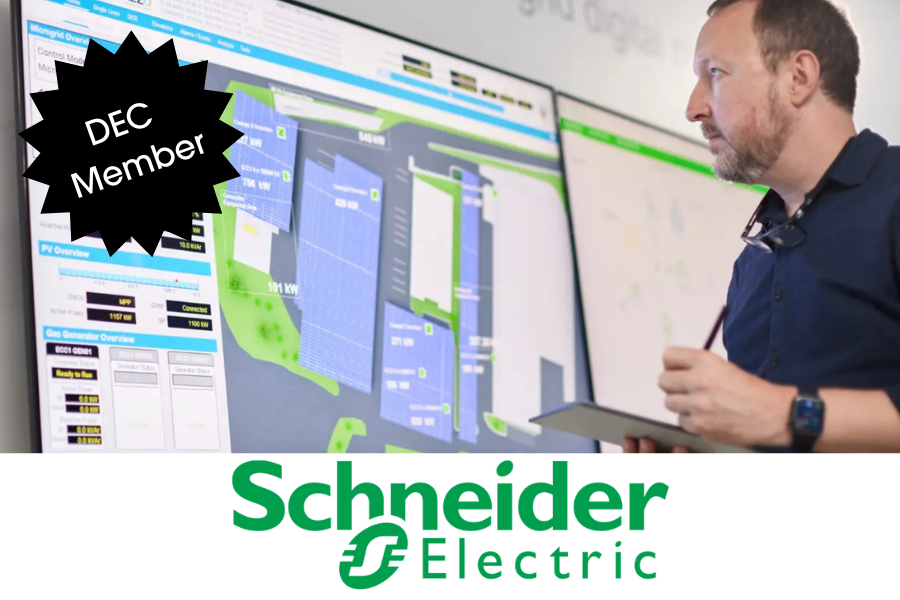
Cars, computers, phones — the everyday technologies we rely on — are all dramatically more advanced than just a decade or two ago.
On the other hand, the way we power these advancements depends on 20th-century technology. Specifically, the energy sector account for about 80% of U.S. carbon emissions, while overall greenhouse gas emissions continued to increase in both 2021 and 2022.
Here’s where microgrid technology comes into play. Microgrids are self-contained electrical networks that draw from on-site energy sources (e.g., solar panels and batteries) and can operate independently of the grid. Microgrids offer straightforward solutions for elevating energy resilience and clean energy. Thus, they’re a key 21st-century solution for powering 21st-century technologies.
Anyone who knows me knows that I could talk about microgrids all day as I am very passionate on their value for resilience and sustainability. I often do, as North America Microgrid President! In this article, however, I’ll let other experts do the talking. At Innovation Summit North America, I had the privilege of hearing microgrid pioneers share top takeaways after building some of the country’s leading microgrids. These pioneers included: Michael Yambrach, Chief of Montgomery County, Maryland’s Office of Energy and Sustainability Montgomery County; Ben Hext, an Industry Analyst in the Verdantix Smart Buildings practice; and Clark Wiedetz, Chief Sales Officer, GreenStruxure. Here are the three most interesting insights they shared.