
The Quantum Revolution: Between Hype and Hope
Source: Siemens | · LINKEDIN · | November 27, 2025
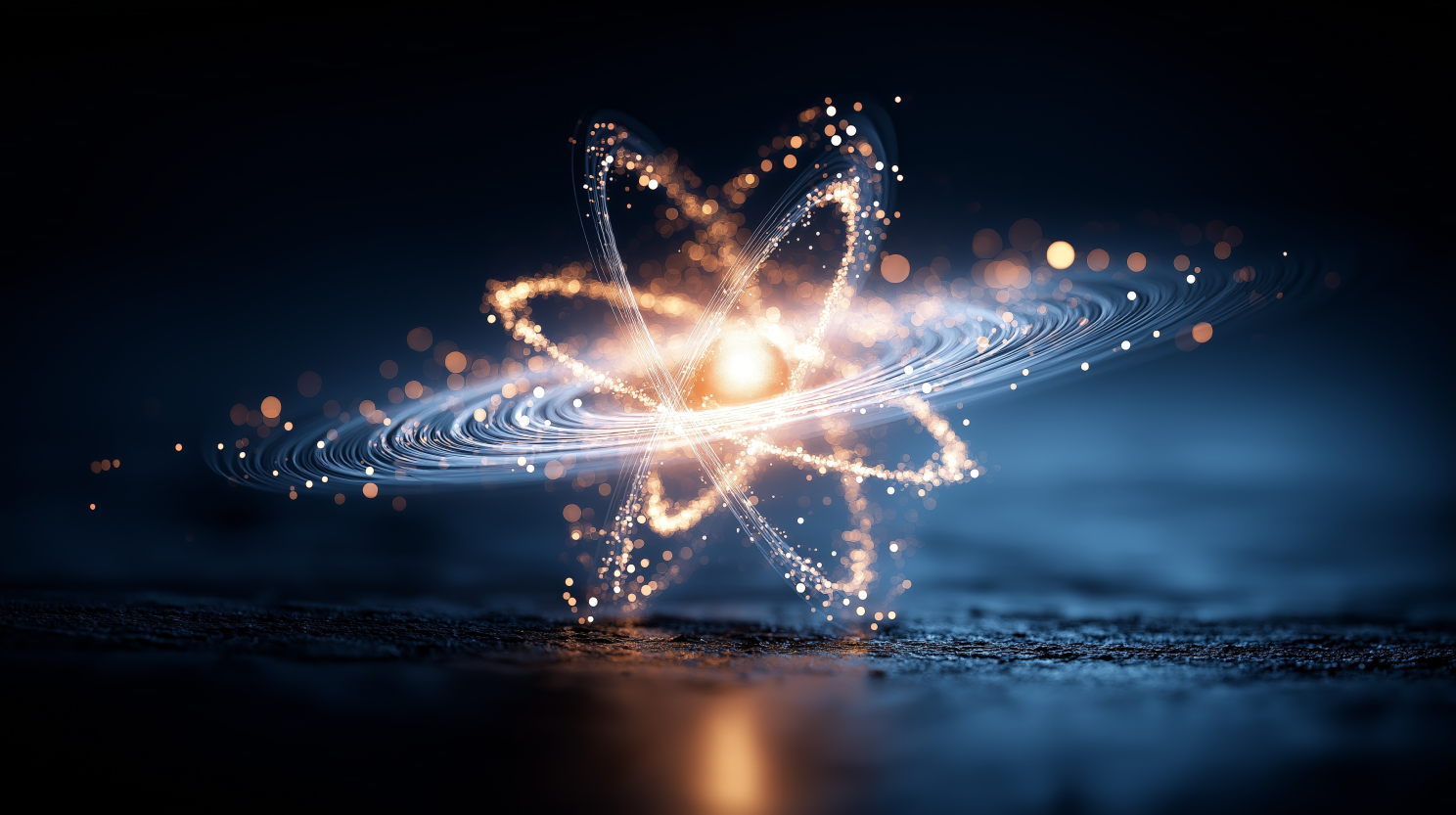
When reality becomes probability
In research labs around the world, a technological shift is underway that challenges our understanding of computation. We’re talking about quantum computers: systems built with cryostats, superconducting circuits, vacuum chambers, and optical components. They are considered one of the most promising future technologies of our decade. But what makes them so special? The answer lies in the fundamental principles of quantum mechanics.
What makes quantum computers unique
Imagine turning left and right at the same time — or flipping a coin that remains both heads and tails until someone looks. This describes superposition: qubits, the basic units of quantum computers, can exist in multiple states simultaneously. Combined with entanglement — where particles remain connected across vast distances — entirely new computational possibilities emerge. These capabilities could support complex optimization tasks across grid management, logistics planning, and industrial simulation.
The architecture of the unimaginable
Inside a quantum computer, conditions more extreme than outer space prevail: temperatures near absolute zero, superconducting materials, or laser-cooled ions. Other systems use photons at room temperature — though they are harder to control. This diversity of approaches shows one thing clearly: development is still in its early stages. Practical superiority over classical systems has not yet been proved. However, many experts expect long-term advantages — the only question is when.