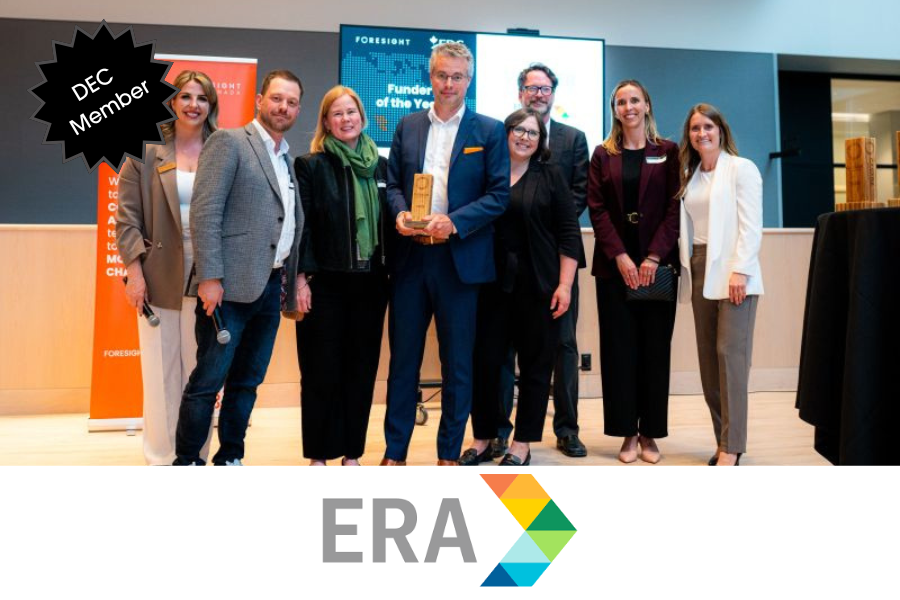
Emissions Reduction Alberta Wins Alberta Cleantech Award for Funder of the Year
Source: Heather Kingdon | · FORESIGHT · | March 22, 2025
Foresight Canada announced the winners of the Alberta Cleantech Awards at last night’s sold-out ceremony which took place at the Inventures 2025 Conference in Calgary. The event celebrated the region's top innovators, funders, adopters, and supporters who are accelerating the adoption of clean technologies and strengthening Alberta’s economic resilience. This year’s award winners showcase the province’s ability to turn industry strengths into sustainable, future-oriented progress.
Alberta has long played a leading role in energy innovation, becoming the first province in Canada to develop comprehensive carbon sequestration legislation over a decade ago. Today, Alberta continues to build on that legacy while strategically growing its cleantech sector, positioning itself as a hub for clean hydrogen production, carbon capture integration, and renewable energy development. In 2023 alone, 92% of Canada's growth in renewable electricity generation came from Alberta. Through government support and a growing ecosystem of innovators, Alberta is charting a path toward a diversified, low-emissions economy—as demonstrated by the accomplishments of this year’s Alberta Cleantech Award winners.
Funder of the Year: Emissions Reduction Alberta (ERA)
Emissions Reduction Alberta (ERA) invests revenue from Alberta’s carbon pricing system to support clean technology projects that reduce greenhouse gas emissions and boost the provincial economy. Recent funding includes $55M for 15 projects expected to significantly cut emissions and create jobs, and a $50M Strategic Energy Management for Industry (SEMI) program to enhance energy efficiency in industrial facilities. ERA also invests in water filtration and heavy oil flow technologies, and launched a $50M Industrial Transformation Challenge for significant emissions reduction technologies. Additionally, ERA is committing $34.5M to advance hydrogen projects and $2.8M for a waste-to-energy carbon capture facility study.