Could Quantum Computing Make Our Energy Grid Sustainable?
Source: Stephanie Stacey | · TECH MONITOR· | May 17, 2023
Companies like E.ON and EDF are pinning their hopes on quantum optimisation to help achieve big sustainability targets and weather future energy crises.
Energy companies have had a lot to worry about this past year. The economic disruption caused by Russia’s ongoing war in Ukraine has amplified calls for an accelerated energy transition in Europe — a shift that could offer the combined benefits of alleviating the continent’s dependence on Russia and cutting down on its use of highly-polluting fossil fuels.
In order to keep global warming under 1.5°C — the stated goal of the 2015 Paris Climate Accords — carbon emissions will need to reach net-zero by 2050, according to the UN. Added to this challenge? Global power consumption is expected to triple by 2050 as living standards grow worldwide, according to a 2022 report by McKinsey.
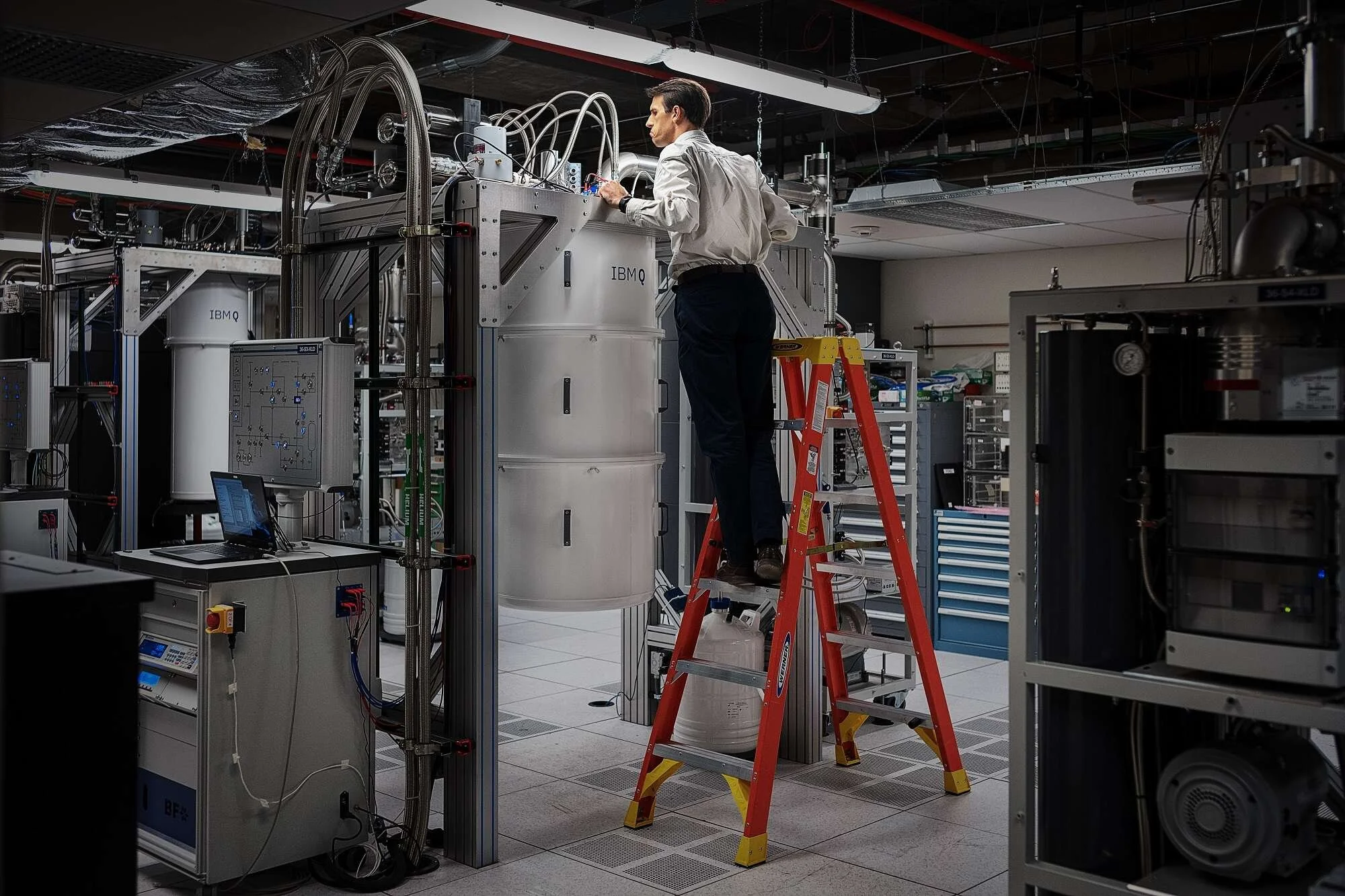
In their efforts to achieve these complex — and apparently conflicting — objectives, energy companies such as E.ON SE, Eni, and EDF are turning to quantum computing. They’re hoping to harness the technology’s immense potential processing power to deliver more energy more efficiently, thus maintaining a stable and sustainable supply of electricity for the years to come.
Quantum optimisation is well-suited to the energy sector
One way to help get to net zero is by decentralising energy supply networks, a trend that’s happening across Europe. Every day, companies are adding more small-scale generative units, such as wind turbines and household solar panels, into their power grids. They’re also connecting a host of EV charging points, which feed batteries that can store power until it’s needed.
These decentralised grids tend to be more efficient than traditional networks since the sources are often closer to the users, meaning less energy is lost during transmission. They’re also better at linking small-scale renewable sources, rather than depending exclusively on large-scale plants, and offer greater control over the entire network, helping companies cope with fluctuating demand.
The perks are numerous. Managing decentralised grids, however, is incredibly complex since companies have to make real-time decisions that factor in a huge range of variables. This leaves the energy industry facing “very difficult mathematical problems,” explains Heike Riel, a researcher at IBM. Such problems might, indeed, turn out to be too tough for classical supercomputers to handle — meaning energy suppliers are being forced to rely on approximations that, given their margins of error, don’t offer maximum efficiency.
But it’s not just supply that needs to be optimised on decentralised grids. The tools we use to produce and transmit our energy all need to be maintained over their lifecycle for regular wear-and-tear, as well as any damage caused by freak weather or felled trees. This, too, requires complicated scheduling optimisation — both for the maintenance work itself and the teams of workers that perform it. “You’re balancing having lots of extra spare parts, which is basically reducing your efficiency, versus running out, which is going to bring problems in terms of operating capacity,” explains Murray Thom, vice-president at quantum computing company D-Wave Systems.
There’s also the question of setting up new generators. When planning fresh developments, companies need to consider everything from local weather conditions to demand, grid constraints, supply chain challenges, transportation costs, and employee availability. Renewables, like wind turbines, are particularly vulnerable to the vagaries of their environment, so such calculations will only grow more prescient — and more complicated — as companies shift to sustainable resources.