A Case Study: Energy Transformations Are Customer-Led
Source: Gary Holden | · LINKEDIN · |May 10, 2025
If you take government subsidies off the table, the most effect energy transformations are customer-led. Enabling wide-spread customer engagement is by far the most important aspect of market design, as consumers write the checks and, with enough education, collectively become the ’invisible hands’ that change the course of history.
A Case Study relevant for today
Today is the twentieth anniversary of a great example of this in Alberta, Canada. Twenty years ago, the Enmax executive team made the bold decision to design an energy retail proposition that would be so compelling to consumers, that the take-up of the product would allow Enmax to accrue as much as 50% market share of all electricity sold to the mass market. Market research indicated that it might be possible given the overall dissatisfaction that was measurable at the time. Bold stuff. This was intended to be the first step in engineering a tectonic shift in how a deregulated market would evolve from that day forward.
The drivers behind this were not trivial: as not only would it create enormous value for the City of Calgary, it's shareholder, but this kind of market share would allow Enmax to shape the future of generation in the province. Aspirations to rise to 50% from an 18% market share, was an enormous task, as market share points in Alberta hadn’t material shifted since deregulation began. This was primarily because billing restrictions set up accidental barriers to switching, and traditional vertically-integrated companies, such as TransAlta, EPCOR and ATCO, were losing interest in serving customers directly. More profit was to be made riding the spot market, they argued.
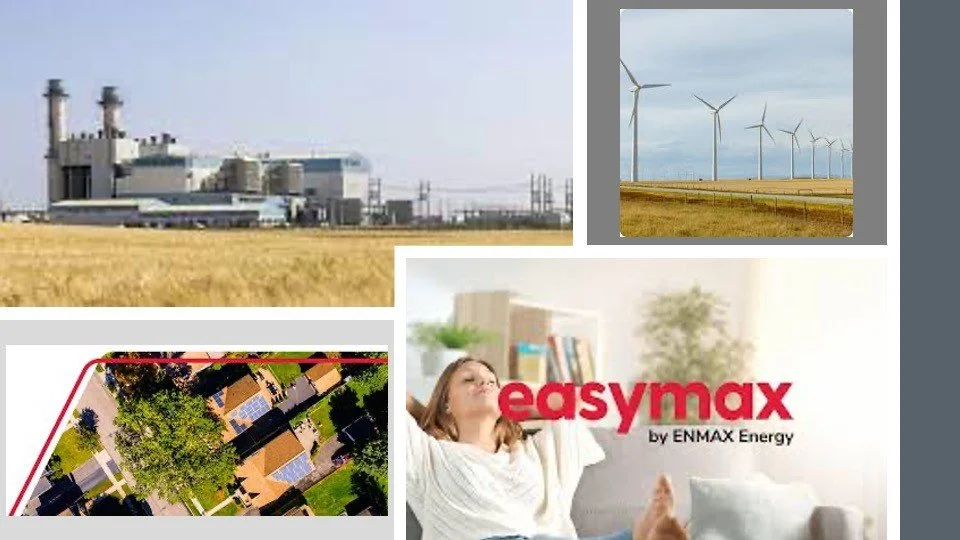
For those close to the story, you know what happened. The “EasyMax” campaign was launched and, within 2 years, Enmax had 44% of the market and revenues more than doubled; an unprecedented gain for any electricity market, world-wide. The shift to the EasyMax energy plan meant a new customer was signing up every 2 to 3 minutes, of every business day, in period of about 700 days. Not a single sale by an annoying door-to-door salesperson either. An amazing gain of $1.5 Billion in repeatable annual revenue, from a single, well-crafted, call to action.
The energy plan for customers went against all norms. Features that gave an unprecedented one-way option to the customer, an emphasis on simplicity, and, most importantly, a long-term fixed price based on the Long Run Marginal Cost (LRMC) of the best-available technology. This doesn’t sound particularly amazing now, but in those days, the generation part of the market had conditioned consumers to expect regular volatility, so the idea of a retailer disassociating the retail price from spikes in gas prices or seasonal supply constraints, was not popular. Generators make money on volatility; and customers generally lose. Customers always need a long-term hedge, particularly in a market where market power is so evident.