
SERVING CANADA’S DECENTRALISED ENERGY INDUSTRY SINCE 2003.
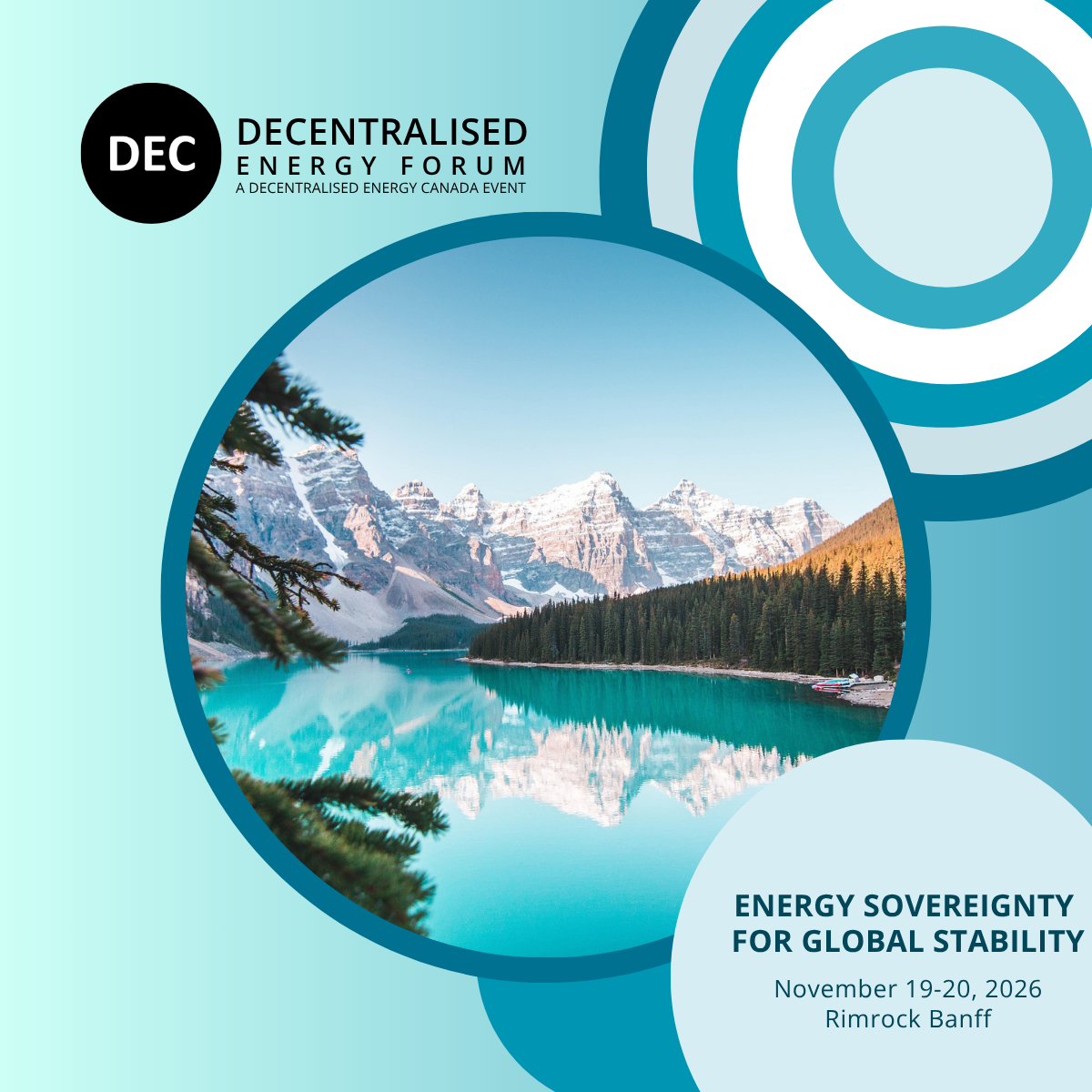
2026 Decentralised Energy Forum
Energy Sovereignty for Global Stability
November 19-20, 2026
Rimrock Banff

CANADA’S MARKET ACCESS HUB
Decentralised Energy Canada (DEC) is the national voice of Canada’s decentralised energy industry—bringing together the companies and institutions shaping the future of energy systems.
With more than two decades of experience, DEC has helped bring decentralised energy projects to life while elevating the companies leading this transition. Our members aren’t just participating in the energy transition—they are defining it.

7 DRIVERS OF DECENTRALISED ENERGY
By shifting our generation from centralised energy to decentralised energy, our energy systems become more diversified and responsive to an increasingly dynamic interface between the grid and consumers.
Bringing the source of energy production closer to consumption increases transfer efficiency, reduces emissions, and decreases energy costs.
Decentralised energy supports a transition to a secure and sovereign energy future.
1
Global Commitments to Emissions Reduction
197 countries have adopted the Paris Agreement – of those, 179 have solidified their climate proposals with formal approval.
2
Traditional Electrical Grid Challenges
Traditional electrical grids are facing significant strain due to aging infrastructure, electrification, and the integration of intermittent renewable energy.
3
Rise of Prosumers
Prosumers generate energy onsite to meet some or all of their own needs. Grid-connected prosumers are becoming more prevalent as more jurisdictions reward electrical energy systems located closer to the consumer, especially if they result in reduced congestion on the grid.
4
Digitalisation of Utilities
Digital transformation could unlock $1.3 trillion of value for the electricity sector. Four high value themes are: asset life cycle management, grid optimisation and aggregation, integrated customer services and beyond the electron.
5
Lower Cost Renewable Energy and Storage
Solar PV module prices down by ~90% since 2009 and wind turbine prices down ~55-60% since 2010. Battery prices down by ~87% since 2010.
6
Extreme Weather and Natural Disasters
The global economic costs from extreme weather and natural disasters average approximately $250 billion to $260 billion per year which has resulted in an accelerated adoption of decentralised energy, shifting it from a niche sustainability trend to a critical infrastructure resilience strategy.
7
Rising Demand for Electricity
Electricity for data centers and electrification of transportation and industrial processes. As many as 700 million electric passenger vehicles could be on the road globally by 2040 with 75% being autonomous vehicles. An autonomous vehicle uses and generates around 4000 GB of data per day which equals between 0.5 kWh and 2.5 kWh of electricity per day.